
About
Message from the Chancellor / Profile
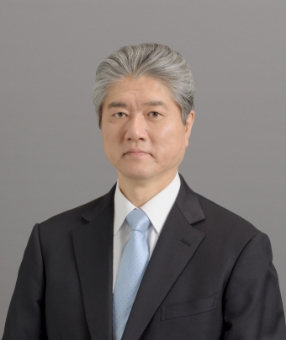
Biography
- HASEYAMA Akira
- Born in Akita City in 1952 and raised in Sendai City
-
1975: Graduated from the Department of Law, Faculty of Law, Keio University
1979: Graduated from the Department of History, Faculty of Letters, Keio University
1981: Completed the Master’s Program in History, Graduate School of Letters, Keio University
1984: Completed the Doctoral Program in History, Graduate School of Letters, Keio University (completed coursework without obtaining a doctoral degree)
1987: Appointed Lecturer, Faculty of Law, Surugadai University; later promoted to Associate Professor, 1994: Promoted to Professor, Faculty of Law, Surugadai University
1997: Appointed Professor, Faculty of Letters, Keio University Subsequently served as Director of the Student Affairs Center, Dean of Students, and Director of the Shido Bunko (Institute of Oriental Classics), Keio University
2007: Appointed Dean, Faculty of Letters, Keio University, 2009: Appointed Executive Director, Keio University
2017 to 2021: President, Keio University
2022 to present: Chancellor, Hokkaido Higher Education and Research System. -
In addition, he has consecutively served as President of the Japan Association of Private Universities
and Colleges and Chairman of the Federation of Private University
Associations of Japan.
He currently serves as President of the All Japan University Baseball Federation and as a Director of the Jinbun-Chi Support Forum, among other positions. - His expertise is Legal History and Ancient Japanese History. He holds a Doctor of Law degree.
Mission and Vision of the System
To continuously meet societal needs by fully leveraging our educational, research, and social contributions, we have established a mission that the System is committed to fulfilling.
At the same time, based on our mission, we formulate our vision, goals, and strategies, establish a management system that is independent, autonomous, and strategic, and operate the System as a corporate entity to achieve them.
Logo/Slogan
Concept “Constellation of Pioneering”
This concept represents a guiding light for the future. It expresses the idea of forging new paths by connecting the diverse range of study options available in Hokkaido, much like linking individual stars to form a constellation. To express the identity of Hokkaido, the design places the diverse range of available study options such as commerce, agriculture, and engineering along a line that can also be seen as the outline of Hokkaido. These elements are connected like stars forming a constellation.
The flowing line also evokes the vast roads of Hokkaido, symbolizing both the region’s expansive landscape and the new paths we will continue to forge into the future.